Moldova is among the countries hardest hit by the consequences of the conflict in the Middle East, given the rise in energy and fertilizer prices – the EBRD
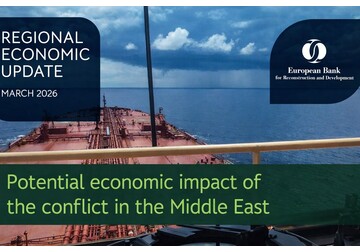
This is stated in a new Regional Economic Prospects report published by the European Bank for Reconstruction and Development titled “The Conflict in the Middle East Poses Risks to Economic Growth in EBRD-Served Regions.” The report assesses the potential economic consequences of the conflict in the Middle East, noting how the conflict has affected regions where the EBRD operates, leading to rising energy and fertilizer prices, as well as disruptions in trade and tourism and tighter financing conditions. The EBRD study notes that the overall economic impact of the war will depend on the duration of the conflict and the extent of damage to energy infrastructure. The consequences are likely to persist even after hostilities end. Direct negative impacts on GDP growth through energy, fertilizer, and staple food prices, disruptions in supply chains, tourism, and remittances from Gulf countries will be exacerbated by higher inflation, increased pressure on government budgets, and tighter financing conditions in response to rising inflation. Spillovers from developed European countries, particularly Germany—a key trading partner for many EBRD economies—will further amplify the negative impact on growth, as most developed European economies are adversely affected by rising energy prices. The economic impact will also depend on the ability of individual economies to mitigate the effects of trade-related shocks using their available fiscal and external reserves. As noted, overall, based on direct disruptions caused by the conflict—including energy imports, fertilizer and food imports, remittances from Gulf countries, and fiscal capacity to mitigate rising energy and food prices—Lebanon, Jordan, Iraq, Egypt, Ukraine, Mongolia, Senegal, Tunisia, Moldova, Kenya, Turkey, and North Macedonia are among the hardest-hit economies in the EBRD regions. At the same time, according to EBRD estimates, the greatest negative impact on Moldova’s GDP could come from rising prices for petroleum products (-4.4% of GDP), gas (-2.5% of GDP), and fertilizers (-0.5% of GDP). At the same time, rising food prices could have a positive impact on GDP growth (+1.2% of GDP), as could trade with Iran and the Gulf states (+0.4% of GDP). That said, Moldova has a decent total external debt-to-GDP ratio—57.6%—and its overall external vulnerability indicator is not as high as that of Lebanon, Jordan, Iraq, Egypt, Ukraine, Mongolia, Senegal, or Tunisia. Earlier, the EBRD lowered its forecast for Moldova’s economic growth in 2026 by 0.8 percentage points—from 3.8% to 3%. At the same time, EBRD experts projected Moldova’s GDP growth at 3.5% for 2027. These figures were cited in the EBRD’s February Regional Economic Prospects report. // 26.03.2026 – InfoMarket.