Moldova will abolish the requirement that imported fuel be transited exclusively through oil depots while contractors will be able to amend contracts for the procurement of construction materials in the event of excessive price fluctuations
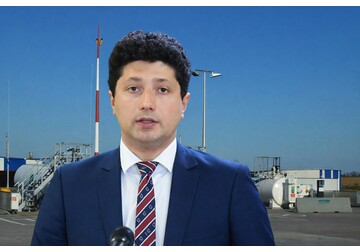
As announced by Radu Marian, Chairman of the Parliamentary Committee on Economy, Budget, and Finance, this is provided for in a corresponding bill that he, along with several colleagues from PAS, submitted to parliament to strengthen mechanisms for state intervention in situations of heightened alert or an energy crisis. According to the document, in a crisis or state of high alert, the National Agency for Energy Regulation (ANRE) will be able to establish temporary deviations from the standard formula for calculating the price cap on regular gasoline and diesel fuel by adopting emergency decisions. For example, in crisis situations, ANRE will be able to adjust the reporting period (from 14 days to 7 days) or use alternative price indices (CIF instead of Platts). Additionally, the requirement to transit imported fuel exclusively through oil depots will be abolished. This will allow products to be shipped directly to gas stations, reducing delivery times and avoiding overburdening of storage infrastructure. Such flexibility can accelerate the replenishment of operational stocks at gas stations, helping to maintain the continuity of supplies to end consumers. In addition, there are plans to reduce the risk of disruptions in road construction and repair by adopting a measure that will allow contractors to adjust procurement contracts accordingly (not only based on the inflation index) in the event of excessive cost fluctuations (an increase or decrease of more than 15%, based on the National Bureau of Statistics’ data). “We propose adopting these measures so that, in the event of new shocks in the global energy market, government agencies will be able to intervene promptly and immediately,” emphasized Radu Marian. // 29.04.2026 — InfoMarket