The IMF supported the initiation of discussions on a new cooperation program with Moldova under the Policy Coordination Instrument without direct financing
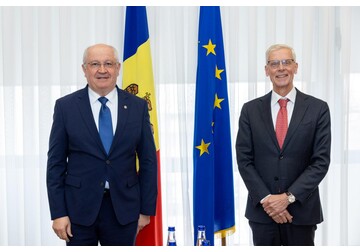
This was discussed during a meeting held in Chisinau between Prime Minister Alexandru Munteanu and International Monetary Fund Deputy Managing Director Marnix van Rij. According to the Cabinet of Ministers' press service, the parties discussed the current regional situation and noted the positive findings of the IMF mission's latest report to Moldova. The report was reviewed at the IMF Executive Board meeting on February 27, and approval was given to initiate discussions on a new program with Moldova. Alexandru Munteanu welcomed the positive assessment of macroeconomic developments in Moldova and the IMF Executive Board's recommendations for the near future. The Prime Minister emphasized that the government is focused on implementing reforms to advance along a European path, stimulate economic growth, and strengthen the country's security and resilience. According to the IMF report, Moldova's economy is recovering from a series of shocks and challenges in recent years, supported by structural reforms and increased investment, including with support from the European Union. "Moldova's economy is recovering from multiple shocks. We project economic growth of 2.7% in 2025 and 2.3% in 2026, supported by a good harvest, strong domestic demand, and substantial financing from the EU," the IMF concluded. The IMF Executive Board commended the implementation of ambitious structural reforms and the maintenance of prudent macroeconomic policies on the path to EU accession, which will contribute to greater stability and improved living standards for citizens. IMF management also supported the launch of discussions on a new cooperation program under the Policy Coordination Instrument (PCI). It is planned that deepening Moldova's dialogue with the IMF will contribute to the consolidation of reforms, strengthening economic resilience, and supporting the country's European path. A key topic of discussion was the fight against corruption and disinformation, which remain priorities for Moldova. IMF Deputy Managing Director Marnix van Rij emphasized the importance of aligning the efforts and assistance of all Moldova's partners to ensure the maximum impact of external support, expressing his readiness for a constructive dialogue with the Moldovan authorities. Earlier, IMF Resident Representative in Moldova Svetlana Cerović noted that the Moldovan government had formally requested the IMF to begin work on a new program, which could be designed for three years. This involves not simply continuing technical interaction with the Fund, but rather developing a new economic policy framework that could serve as an important institutional anchor for reforms in the coming years. The IMF Resident Representative noted that discussions are underway within the Fund on how best to formulate the future program and how it can support the country's economic policy. However, the process has only just begun and requires time, as it involves developing a new format for cooperation and agreeing on the parameters of the future economic course. As a reminder, Moldova's previous cooperation program with the IMF was approved by the Fund's Executive Board in December 2021. It was implemented through two IMF instruments—the Extended Credit Facility (ECF) and the Extended Fund Facility (EFF)—and was designed for 40 months, ending in 2025. Initially, the program's size was approximately $400 million, but following the outbreak of war in Ukraine and the energy crisis in the region, the program was expanded. In December 2022, the IMF approved its expansion, bringing the total volume of resources available to Moldova to approximately $800 million. The program included support for macroeconomic stability, strengthening fiscal policy, public administration reforms, increasing the transparency of state-owned enterprises, developing the financial sector, and strengthening the independence of the National Bank. Particular attention was paid to increasing the economy's resilience to external shocks, particularly in the energy sector. Another program was approved on December 7, 2023, in the amount of approximately $172 million, under the Resilience and Sustainability Facility (RSF). The RSF aimed to support Moldova's efforts to build resilience to climate shocks, implement reforms in the energy sector, enhance the country's financial sector's preparedness for the impacts of climate change, and mobilize sustainable financing. However, both programs expired in October 2025, leaving Moldova with a shortfall of approximately $165 million. However, the programs played an important role in maintaining the country's macroeconomic stability during a period of severe external shocks. The existence of an agreement with the IMF is traditionally viewed by international partners as a signal of trust in the state's economic policy and facilitates the attraction of additional financial support from other international financial organizations and donors. // 16.03.2026 — InfoMarket