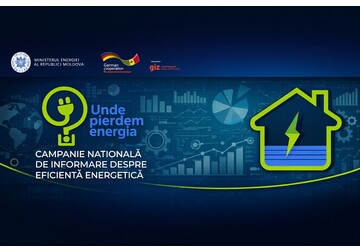
Moldova’s Ministry of Energy has launched a national campaign titled “Where Are We Wasting Energy?”
This initiative aims to bring energy efficiency closer to people’s daily lives through clear explanations and simple tips that are easy to implement in every household. The campaign is based on the idea that, in addition to measures taken at the state level to ensure the stability and diversification of energy sources, everyday habits in every home play an important role in how energy is consumed. As noted by Vitalie Mita, State Secretary of the Ministry of Energy, as part of this campaign, the Ministry of Energy aims to combat myths related to energy consumption and promote a more conscious and balanced approach to energy, starting with simple things in people’s real lives. The latest data show an increase in energy consumption of more than 10% compared to the previous year, which directly affects household expenses. Households account for nearly 47% of total energy consumption in Moldova, demonstrating just how important the way energy is used at home is. Therefore, energy efficiency is becoming a crucial element—not as an alternative to government policy, but as a necessary complement. “How we use energy every day—in the kitchen, in the bathroom, or throughout the house—matters and can make a difference in the long run,” emphasized Vitalie Mita. According to him, the timing of the campaign’s launch was not chosen at random: it begins immediately after the end of the heating season, when people have already felt the impact of winter bills and have a clear point of reference. In this context, the educational and entertaining approach aims to help the public better understand the factors influencing consumption and to be better prepared for the next season by having the necessary information. Marco Buechel, head of the GIZ E4M project component, which supports the Ministry of Energy in energy efficiency projects, emphasizes that it is important for efforts to reduce and improve energy consumption efficiency to come from all stakeholders, so that the state provides the necessary levers of influence and citizens are oriented toward responsible consumption. He noted that Moldova remains heavily dependent on energy imports, and recent events have highlighted households’ vulnerability to crises and price fluctuations. In this regard, Germany, through GIZ, reaffirms its support for the people of Moldova by investing in measures that promote energy efficiency and reduce the burden on budgets in the long term. It is particularly important that all stakeholders are united in achieving a common goal. At the heart of the campaign is a series of six short videos on YouTube, which will be released monthly through October. In each episode, a character played by actor Valeriu Rașcu, alongside energy efficiency expert Ina Borozan, will visit real households to analyze consumption, living conditions, and daily habits that affect electricity bills, specifically showing where energy is “lost” and what simple solutions can change the situation without major investments. Each episode will use concrete examples to show where energy is “lost” and what simple solutions can improve the situation without major investments, ranging from small changes in the home to behavioral changes in daily life. The campaign also includes an interactive component. Interested individuals can register to receive an analysis of their home and recommendations tailored to their specific situation. In recent years, citizens have been asking the same questions: how are bills calculated, why are prices rising, where is energy being wasted, and how can they pay less for energy? But there are solutions that can save energy and money on bills, and many of them involve simple things that citizens can control—from insulating windows to turning off the lights when leaving a room. “From the kitchen to the bathroom, from how we cook to using hot water or household appliances—in the series, we’ll show what everyday decisions we can make to make next winter easier,” noted Valeriu Rașcu. People interested in analyzing their consumption and receiving personalized recommendations can apply through the National Center for Sustainable Energy’s platform. // 23.04.2026 — InfoMarket.